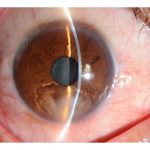
This is also often referred to as a 'corneal ulcer'. In practice, these terms are not directly interchangeable because a cornea may harbor a bacterial infection (i.e bacterial keratitis) without having a loss of tissue (an ulcer) and a cornea may have an ulcer without a bacterial infection. Bacterial keratitis is a serious bacterial infection …


This is also often referred to as a ‘corneal ulcer’. In practice, these terms are not directly interchangeable because a cornea may harbor a bacterial infection (i.e
bacterial keratitis) without having a loss of tissue (an ulcer) and a cornea may have an ulcer without a bacterial infection.
Bacterial keratitis is a serious bacterial infection of the cornea which can, in severe cases, cause loss of vision.
Signs of bacterial keratitis:
▪ conjunctival injection
▪ focal white infiltrates (with epithelial demarcation and underlying stromal inflammation).
Other signs can include:
o Corneal thinning
o Stromal edema
o Endothelial inflammatory plaque
o Descemet’s fold
o Mucopurulent discharge
o Anterior chamber reaction
o Hypopyon.
o Eyelid edema.
In severe cases,
o posterior synechiae
o hyphema
o glaucoma.
Symptoms:
⮚ Rapid onset of ocular pain,
⮚ Redness,
⮚ Photophobia,
⮚ Discharge,
⮚ Decreased vision.
⮚ Contact lenses should be discontinued.
Treatment
Topical broad spectrum antibiotic therapy should be used until culture results are available
Book a Consultation
It’s easy and free!
Tags: